Saturday, June 15, 2013

Istana Budaya


The design of this building was based on Malay culture. Istana Budaya is situated nearby Tasik Titiwangsa along Jalan Tun Razak, Kuala Lumpur. Its construction was completed in 1998. The cabinet has approved the abolishment of National Theatre (Panggung Negara) to ISTANA BUDAYA officially in 2000.

Istana Budaya was mooted during National Cultural Congress in 1971 as a Malaysian art discourse. Its establishment was advanced by the establishment of National Cultural Group (KBN) in 1972 under jurisdiction of Ministry of Cultural, Youth and Sports. In 1973, KBN were moving from Jalan Ampang to National Culture Complex at Jalan Tun Ismail that focuses its activities professionally in traditional dance and music.


Istana Budaya is the first theatre of its kind in Asia possessing advanced stage mechanism for stage plays.


For more information:
http://www.istanabudaya.gov.my/en/


Kuala Lumpur National Zoo

The Kuala Lumpur National Zoo of is especially worth your while if you do not plan to go to places where you might be able to spot the animals in the wild by yourself. In any case a visit to the zoo is a fun trip, which isn’t any different in Kuala Lumpur. The National Zoo is located at about 13 kilometers distance in northeastern Kuala Lumpur, on the side of Jalan Hulu Kelang. In the weekend and on special days the zoo is also opened at night. The ‘Zoo by Night’ is copied well from the Singapore Night safari. It is beautiful to watch the animals by night, especially because they display their natural behavior bette


It is best to go to the Zoo by taxi; every taxi driver is able to find the Kuala Lumpur National Zoo. It might be cheaper to go partly by metro, for this you have to take the Putra LRT to the metro station of Taman Melati or Wangsa Maju and then take the taxi to the zoo. The zoo is opened on weekdays from 9am to 5pm. In the weekend the zoo is opened from 9am to 11pm. The entrance fee is RM15 for adults and RM5 for children under the age of 12

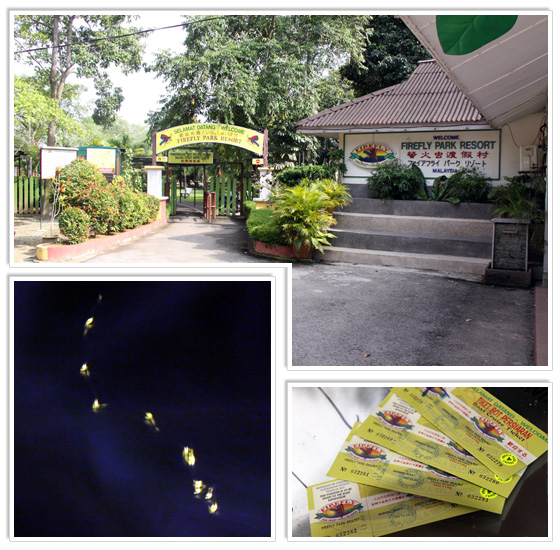
Kuala Selangor Firefly Park


You can reach this great attraction within an hour drive from the city center of Kuala Lumpur. If you are staying in the city, the Kuala Selangor Firefly Park is a very nice place to visit during your stay. The firefly park gives refuge to one of the biggest firefly colonies in the world. Kuala Selangor is a small fishing village northwest of Kuala Lumpur. Finding the attraction is not that difficult; just follow Jalan Kuala Selangor from the city center until you reach Kuala Selangor. From there you just follow the signs that lead you to the firefly park.

Kuala Selangor Firefly Park is opened to public daily between 7.00pm and 10.30pm. Entrance fee for adults is RM15, children below 12 years old pay RM8. Our trip lasted 45 minutes in total. The firefly park is located nearby Taman Kelip / Kelip Bukit Belimbing alongside Jalan Haji Omar. Click here to check out a full screen Google Map with the location of the Firefly Park in Kuala Selangor.


Jalan Tuanku Abdul Rahman ( Jalan TAR )


Jalan Tuanku Abdul Rahman, sometimes referred to as Jalan TAR, was the 'grande dame' of KL shopping in the days before modern shopping complexes took the KL metropolitan city by storm.

This stretch of road is flanked by pre-war buildings whose distinctive facades have been preserved and readapted to accommodate modern retailing businesses. Here, you can walk through the archways of shops for an immersion into a shopping and cultural experience that goes back several decades.


Many established shops like G.S. Gill, P. Lal and P.H. Henry chose to remain when others moved out. The shops here offer a wide range of fabrics and textiles, imported leather goods, bags and luggage, carpets, sports goods and winter clothing.

Narrow alleys between the shops offer a fantastic range of clothing material at irresistible bargain prices. Other established names offer collections of silver and crystalware. Sogo Shopping Complex and Maju Junction Mall are also located along this stretch.


Every Saturday between 5pm- 10pm, Lorong Tuanku Abdul Rahman is closed to traffic and transformed into a night market (“pasar malam”) where petty traders and hawkers sell an assortment of goods in the open air. Walking through it promises to be an interesting experience, and it is also a good place to pick up some casual attire, local products, as well as sample local delicacies.

Little India Brickfields


Brickfields is many things to many people: a concentrated wedge of Indian culture; a bewildering smorgasbord of different worship houses; a haven of blind massage centres; the crossroads for commuters coming in from all parts of the country; a perfect study in contrasts. However you define it, one thing is in agreement: Brickfields is a vibrant community with a soul of its own. Brickfields began as the centre of brick-making in the late 19th century, after a huge fire and flood swept through Kuala Lumpur in 1881. The double disasters took turns destroying the town’s wooden and thatched structures. Sir Frank Swettenham, British resident at that time, responded by ordering the use of brick and tile in the construction of buildings, thus summoning the town’s purpose into being. 

The area soon developed as the nation’s main locomotive depot for the Malayan Railway during the colonial administration. The sights, sounds and colours of South Asia came to Brickfields along with the human capital brought in to work the railway and depot, which have since been transformed into KL Sentral, the nation’s transportation hub.

These days, old government quarters (The Hundred Quarters, built in 1905) can still be found around Jalan Rozario. As you walk along the roads and alleys, the smell of curries drift to entice passers-by, while popular Indian songs blast from family-run businesses that also seem to run round the clock. In 2009, Little India was moved from the area surrounding Jalan Masjid India to Brickfields, in recognition of the township’s status as one of the pioneer Indian settlements in Kuala Lumpur, and its potential to further develop as a centre for Indian culture. Visit the Vivekananda Ashram (1904), which is still used for spiritual education classes, prayer meetings and yoga. The Temple of Fine Arts (TFA) can be found closer to the river along Jalan Berhala.


Famous Southern Indian restaurant, Annalakshmi, is housed in the TFA building. Other notable attractions are the Sri Lankan Hindu Temple, Sri Kandaswamy Temple on Jalan Scott and the Buddhist Temple Maha Vihara. The Zion Lutheran Church (1924), St Mary’s Syrian Orthodox Church and Holy Rosary Church (1903), as well as the Madrasathul Gouthiyyah Surau, a mosque built in the 1980s catering mostly to Indian Muslims can also be found in the area.


These attractions can be visited through the Brickfields Guided Walking Tour, held every first and third Saturday, starting at 9.30am from the YMCA. Run by the Kuala Lumpur City Hall, Brickfields’ fascinating history is explained in detail through the walk.